What CVPR 2026 Says About Production Computer Vision
In my first pass over CVPR 2026, I mapped all 5,010 accepted papers. For this second pass, I reviewed 84 papers through a narrower lens: which research directions are becoming useful building blocks for real products?
Computer-vision research is usually organized by tasks: detection, segmentation, tracking, reconstruction, generation. Production systems are organized by outcomes. A useful product may need to detect an unfamiliar object, follow it through video, understand its spatial context, explain the result, and improve after deployment.
I grouped the conference into 14 broad production areas and shortlisted six papers in each. Every paper was graded on three separate questions: product usefulness, novelty, and distance from deployment.
Six shortlisted papers per production theme. Download the full 84-paper Markdown appendix .
Open vocabulary is becoming practical
Fixed class lists remain one of the largest costs in deployed vision. Adding a new category usually means collecting examples, annotating them, retraining, validating, and redeploying. Open-vocabulary perception changes that interface, even if reliability on unseen categories still separates a useful product from a compelling demo.
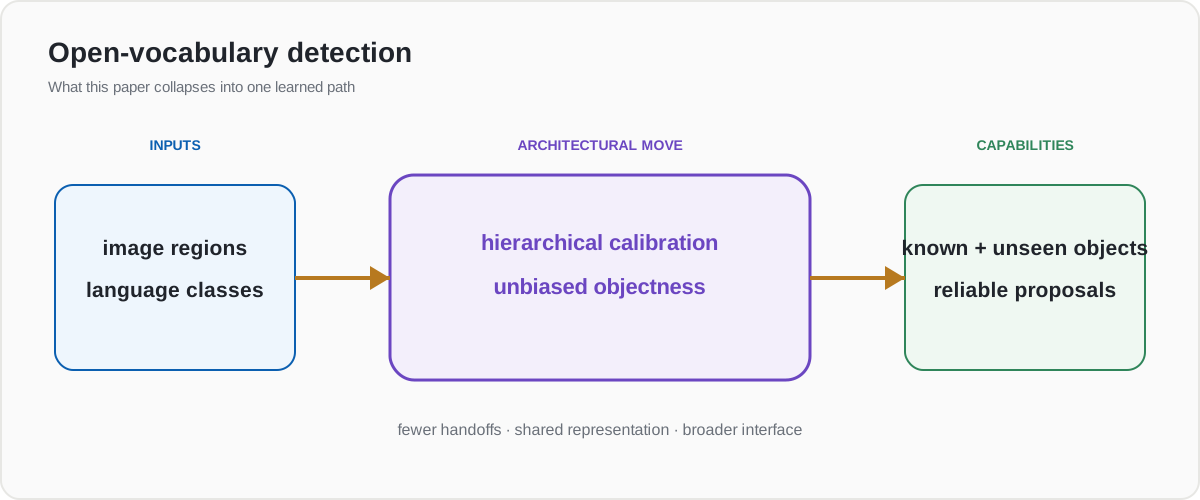
Exploring Hierarchical Consistency and Unbiased Objectness for Open-Vocabulary Object Detection
Production grade A · usable now · medium novelty
It addresses unreliable pseudo-labels and proposal networks biased toward known classes. The research step is incremental, but it attacks two practical failure modes in open-vocabulary detection.
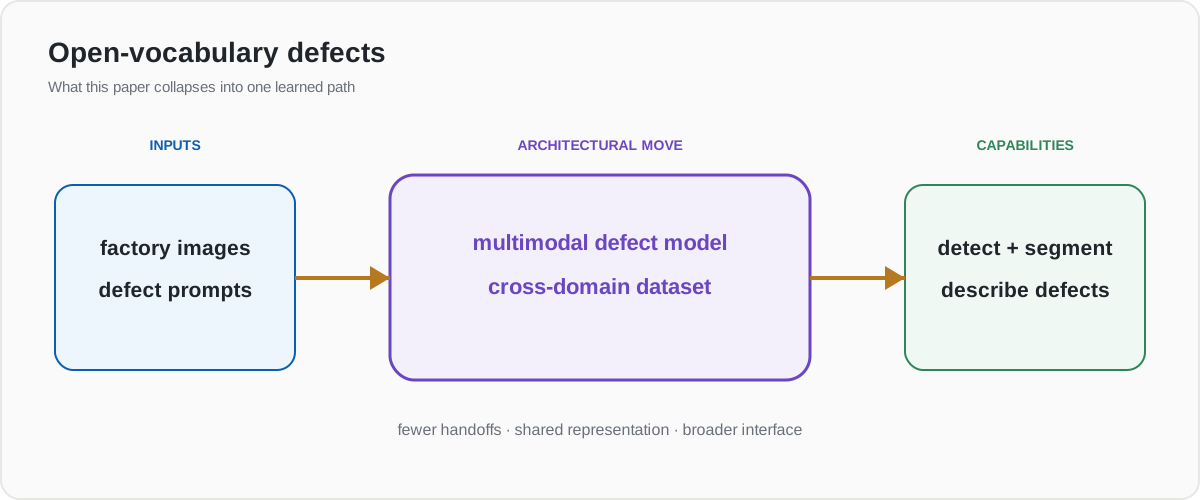
Video products need persistent evaluation
Many deployed video systems still process a stream as nearly independent frames. Research is moving toward persistent state and broader video understanding, but production value often comes from measuring the ugly cases: camera shake, occlusion, scale changes, re-entry, and long gaps.
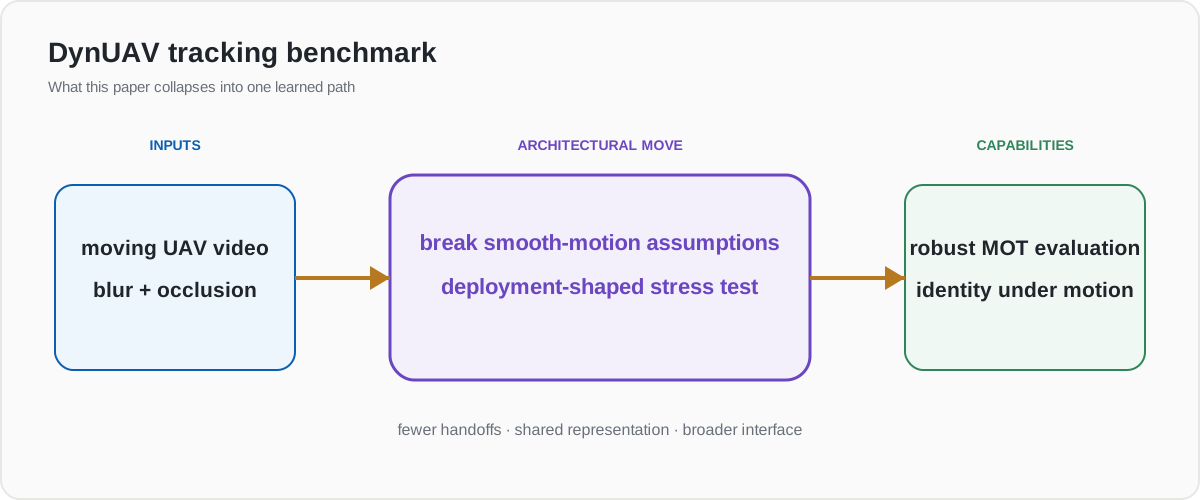
Breaking Smooth-Motion Assumptions
Production grade A · near-term · medium novelty
DynUAV deliberately breaks the smooth-motion assumptions behind many tracking benchmarks. It is valuable less as a product component than as a deployment-shaped test of whether a tracker will survive reality.
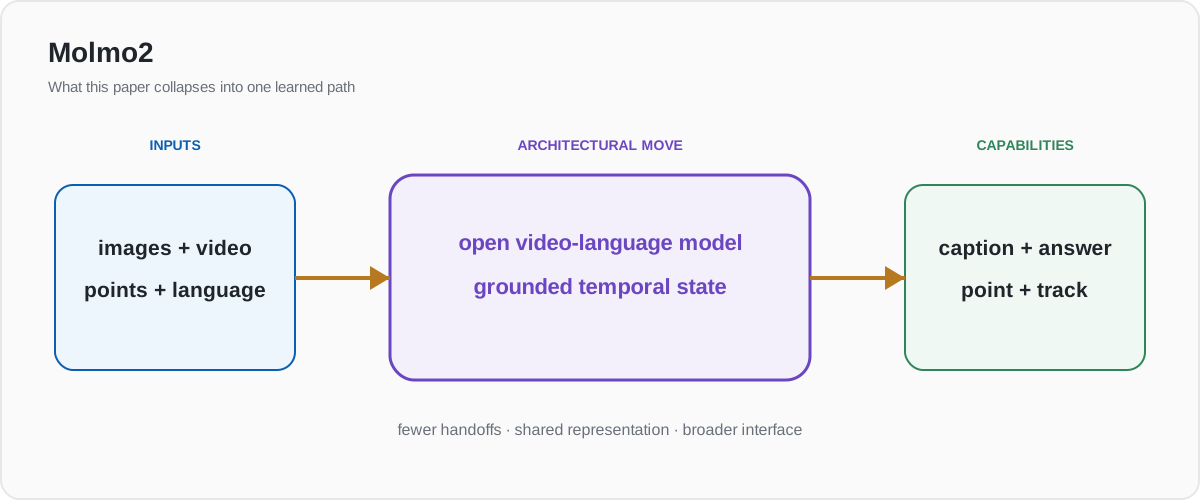
Spatial vision is approaching operational speed
Reconstruction and scene modeling have long produced impressive results. Their production bottlenecks are speed, stability, calibration, and the cost of maintaining a coherent scene over time. The strongest papers increasingly address those operational constraints directly.
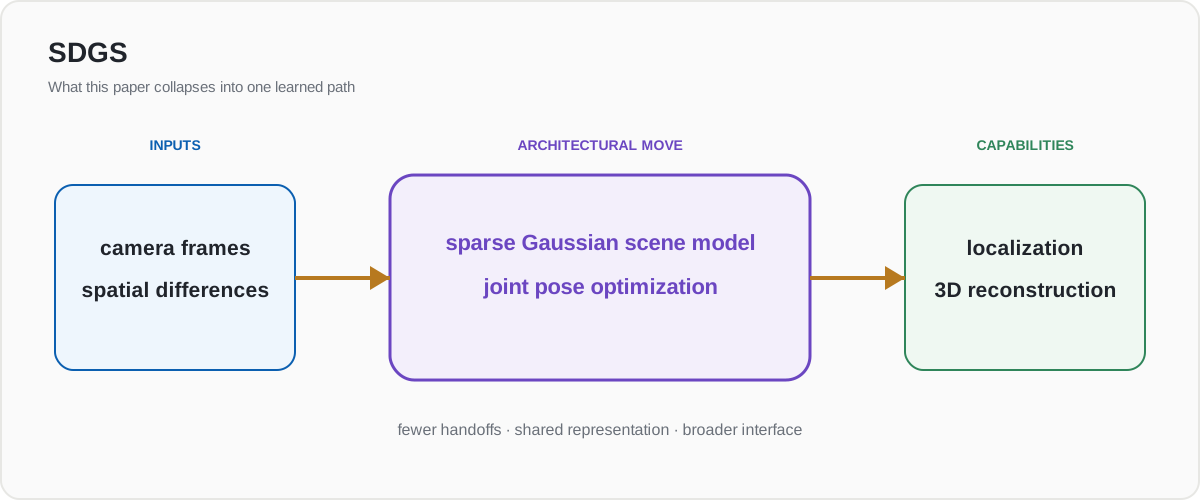
SDGS: Spatial Difference Guided Gaussian Splatting
Production grade A · usable now · medium novelty
Faster pose optimization and a sparse spatial representation make simultaneous localization and reconstruction more relevant to live mapping, inspection, and digital-twin workflows.
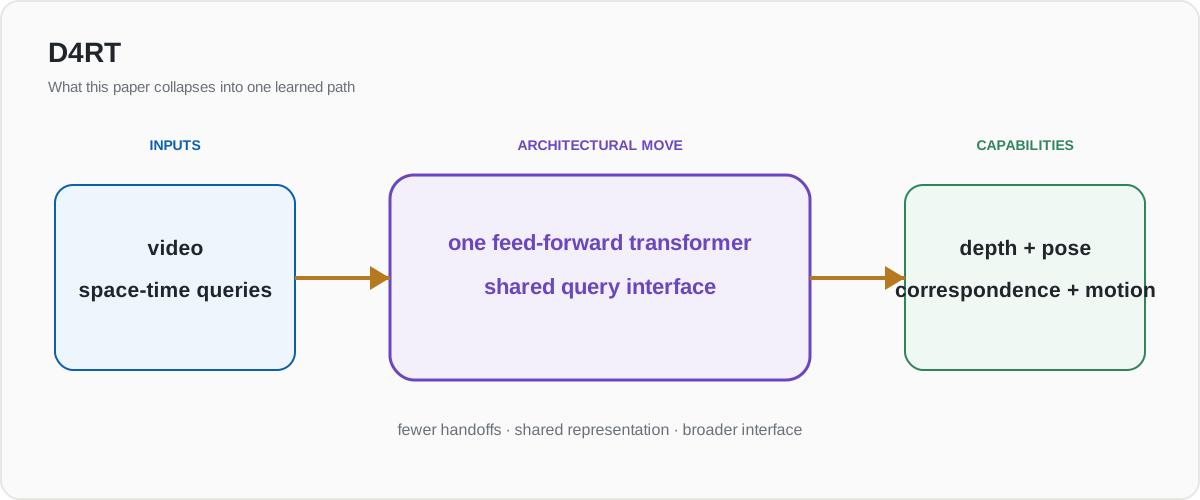
Vision is beginning to close the loop
Active perception and vision-language-action models are among the most strategically important directions in the review. A system that chooses where to look and how to act can automate a complete workflow rather than merely describe an image.
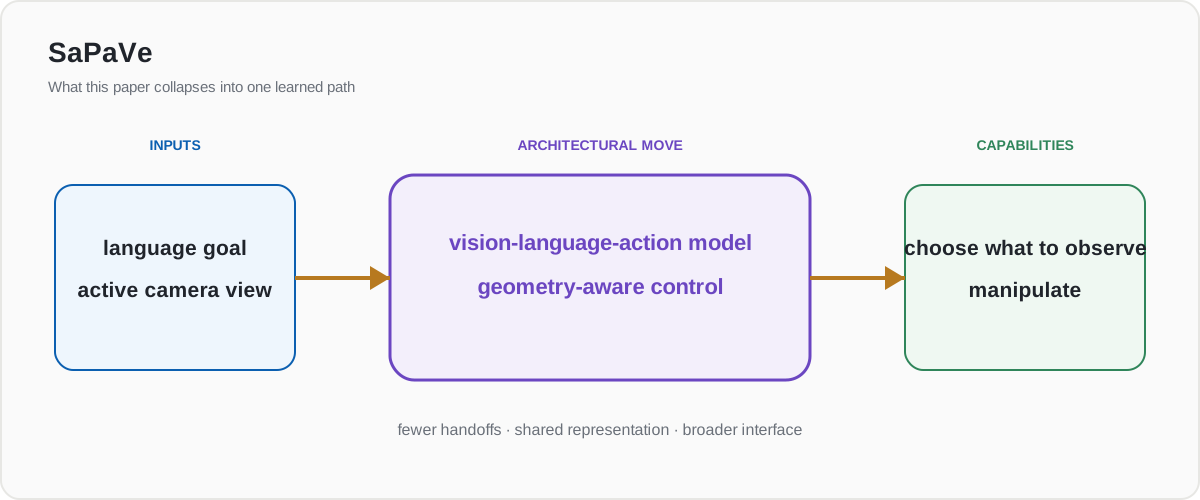
SaPaVe: Active Perception and Manipulation in Vision-Language Action Models
Production grade A · usable now · medium novelty
The robot learns to gather the visual information needed to complete a task instead of passively accepting the current camera view. Closed-loop reliability and recovery behavior remain the hard part.
Deployment itself is becoming a research topic
Some of the strongest production signals are not new application ideas. They are papers that explicitly target latency, power, hardware variation, adaptation, and integration into an existing system.
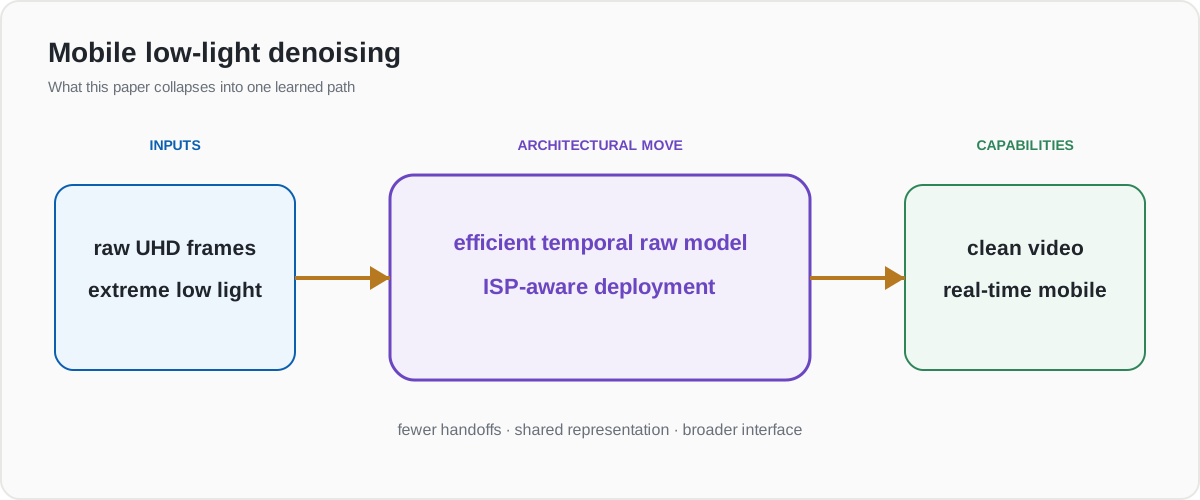
Efficient Real-Time Raw-to-Raw Denoising for Extreme Low-Light Ultra HD Video on Mobile Devices
Production grade A · usable now · medium novelty
The work targets a real product specification: latency, power, temporal consistency, and integration with an existing image-signal processing pipeline.
Where research still outruns production
Generative visual media remains the clearest example. All six shortlisted generative-media papers received production grade B, and five were research-stage. That does not mean they lack commercial value. It means their path to a dependable product is highly application-dependent.
Content creation can tolerate iteration and human review. Inspection, medicine, autonomy, and measurement cannot tolerate invented details or inconsistent outputs. The same caution applies to diffusion-based restoration and reconstruction: a visually convincing result is not automatically a faithful one.
The practical takeaway
CVPR 2026 does not point to one dominant computer-vision product. It points to a broader set of increasingly useful capabilities:
- open-ended perception instead of only fixed class lists;
- persistent video understanding instead of frame-only inference;
- spatial scene models fast enough for operational workflows;
- active perception and action instead of passive observation;
- continuous adaptation, evaluation, and deployment tooling.
The architectural question behind several of these trends deserves its own treatment. I explore it separately in The Pipeline Is Moving Inside the Model.
Method & caveats. I grouped CVPR 2026 into 14 broad production themes and reviewed the top six papers in each. Production grade measures direct usefulness and adaptation cost, not academic quality. The full graded review and scripts live in the CVPR 2026 repository.